A Discovery Hidden in an Ancient Food
Humans have been fermenting vegetables for thousands of years — long before we had microscopes, clinical trials, or scientific journals. Cultures around the world learned, through careful observation and accumulated wisdom, that these living foods supported digestion, strengthened the body, and carried a kind of vitality that ordinary vegetables alone could not offer.
Now, science is beginning to catch up. And one of the most remarkable recent findings comes not from a pharmaceutical lab, but from a jar of kimchi.
Researchers at the World Institute of Kimchi in South Korea have identified a lactic acid bacterium — Leuconostoc mesenteroides CBA3656 — that demonstrates a remarkable ability to bind nanoplastics in the gut and help carry them out of the body through normal elimination. The study, published in the journal Bioresource Technology in 2026, is a compelling reminder that the healing intelligence encoded in fermented foods reaches far deeper than we once imagined.
What Are Nanoplastics, and Why Do They Matter?
Nanoplastics are extraordinarily tiny fragments — smaller than one micrometer — that form as larger plastic materials break down over time. They have made their way into water sources, soil, food packaging, and ultimately our food supply. Unlike larger debris that the body more readily processes, nanoplastic particles are small enough to pass through the gut lining and potentially accumulate in tissues.
Researchers are still building a picture of the long-term effects, but emerging science points to concerns around gut barrier function, microbiome balance, and inflammatory processes. These are not causes for alarm, but they are worth paying attention to — particularly if you are someone who cares about the health of your inner ecosystem.
The good news is that the body is not passive in the face of environmental challenges. And the foods you choose can actively support its natural defenses.
How the Kimchi Bacterium Works
The study examined how Leuconostoc mesenteroides CBA3656 — a strain naturally present in traditionally fermented kimchi — interacted with polystyrene nanoplastics under conditions designed to mimic the human digestive environment.
The results were striking. Under standard laboratory conditions, CBA3656 adsorbed 87% of nanoplastics it encountered. Crucially, when conditions were shifted to simulate the more complex environment of the human intestinal tract, CBA3656 maintained a 57% adsorption rate — while a comparison strain dropped to just 3%. This stability under realistic gut conditions sets CBA3656 apart.
The mechanism is elegantly simple: the bacterium’s cell wall contains functional groups that physically attract and bind nanoplastic particles, much like a microscopic net. Once caught, the nanoplastics remain attached to the bacterial cell rather than passing through the intestinal wall into deeper tissue. The bacterium then carries its captured load out of the body through the stool.
In living experiments with mice, animals given CBA3656 excreted more than twice the amount of nanoplastics in their feces compared to those that did not receive the probiotic — a tangible, measurable result that speaks to the bacterium’s real-world potential.
Fermented Foods as Ancient Partners in Detox
From a naturopathic perspective, this research is not a surprise — it is a confirmation.
Naturopathic philosophy holds that the body possesses innate healing intelligence, and that the task of a skilled practitioner is to support those natural processes rather than override them. One of the most important of those processes is the body’s ability to identify, bind, and eliminate what does not belong.
Fermented foods like kimchi, sauerkraut, and kefir have long been recognized in traditional healing systems as allies for the gut and the whole body. What fermentation does is profound: it transforms raw vegetables into a living ecosystem of beneficial bacteria, enzymes, and organic acids. These microorganisms take up residence in the gut and become part of your inner community — supporting digestion, training immune responses, and, as this research suggests, potentially playing an active role in helping the body process environmental exposures.
The Leuconostoc genus, to which CBA3656 belongs, has been a key player in kimchi fermentation for centuries. Its presence is not incidental — it is central to what makes kimchi the remarkable food it is.
Supporting Your Body’s Natural Pathways
There are beautiful, simple ways to invite these ancient allies into your daily life:
- Choose naturally fermented kimchi — look for refrigerated varieties with live cultures and a short, recognizable ingredient list.
- Eat a wide variety of fermented foods — kimchi, sauerkraut, natural yogurt, kefir, miso, and kombucha each bring their own microbial community and benefits.
- Tend your inner garden — fermented foods work best alongside a diet rich in whole, plant-based foods that feed your beneficial microbes.
- Reduce plastic where you can — glass storage containers, filtered water, and whole foods over packaged ones all help lower your exposure at the source.
- Work with a naturopath — a personalized approach to gut health, detoxification, and nutrition considers your unique body, history, and needs.
A Reason for Quiet Optimism
It would be easy to look at the growing awareness around environmental exposures and feel overwhelmed. But this research offers something else: a reason for quiet optimism, and a reminder that wisdom often lives in the most ordinary places.
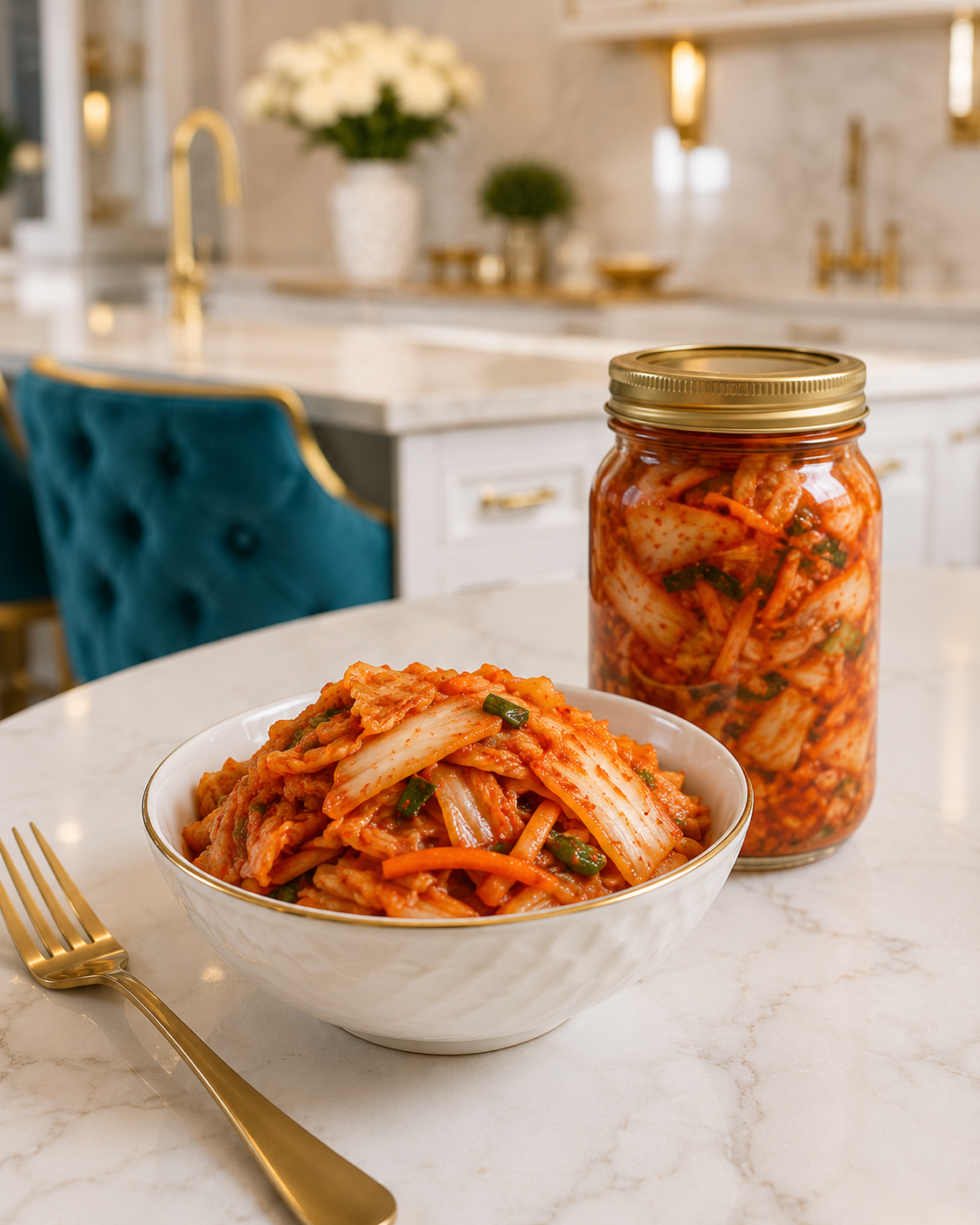
A humble jar of fermented cabbage, prepared the way Korean families have prepared it for generations, may carry within it microscopic partners helping our bodies navigate a modern world. That is not something to be anxious about — it is something to be moved by.
Your body is not helpless. It is wise, resilient, and constantly working on your behalf. The choices you make at the table — including reaching for traditional fermented foods — are a way of working with that intelligence rather than against it.
If you would like to explore how fermented foods, gut health support, and naturopathic care might fit into your personal wellness journey, we would love to speak with you. Nourishing the body starts with one small, beautiful choice at a time.